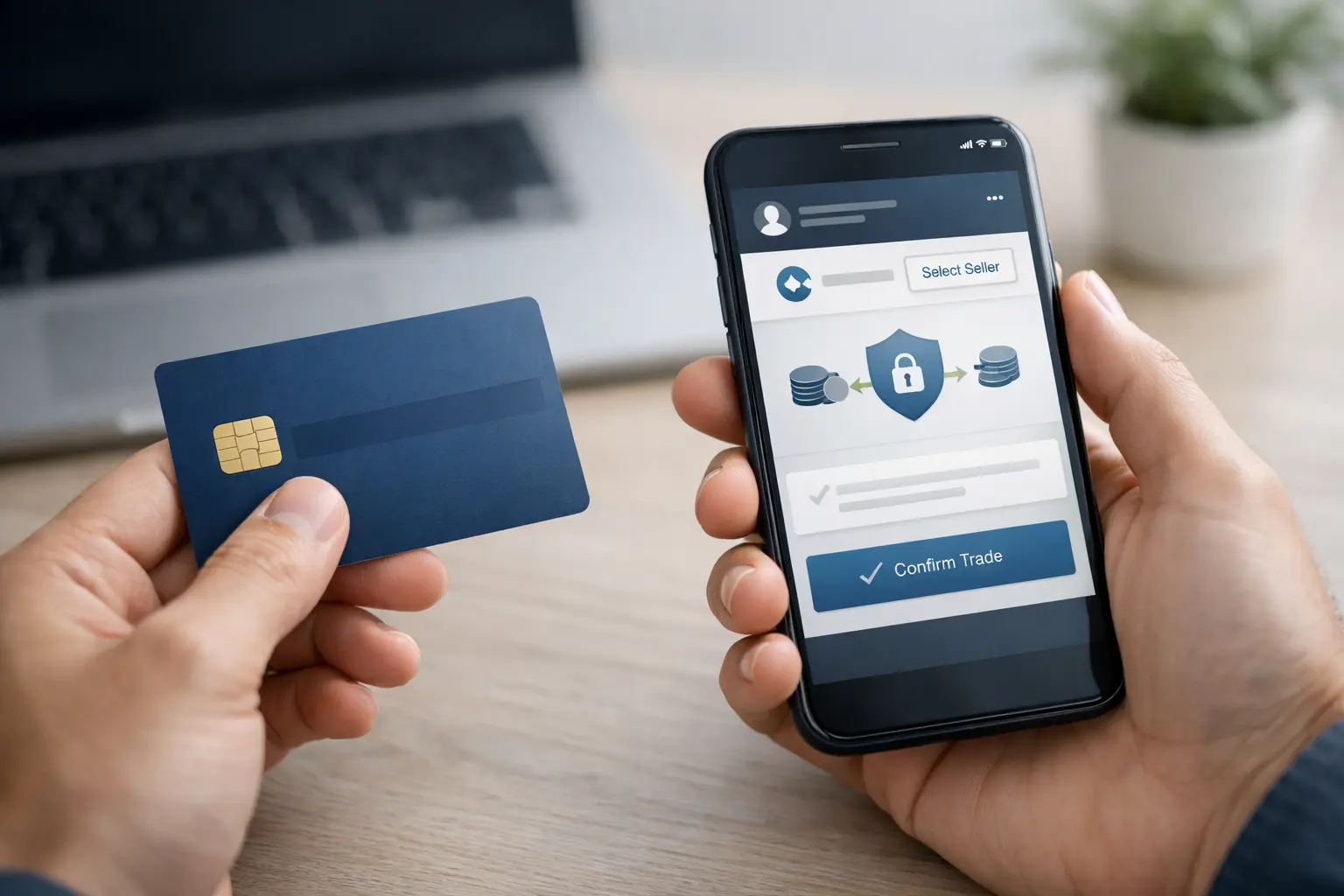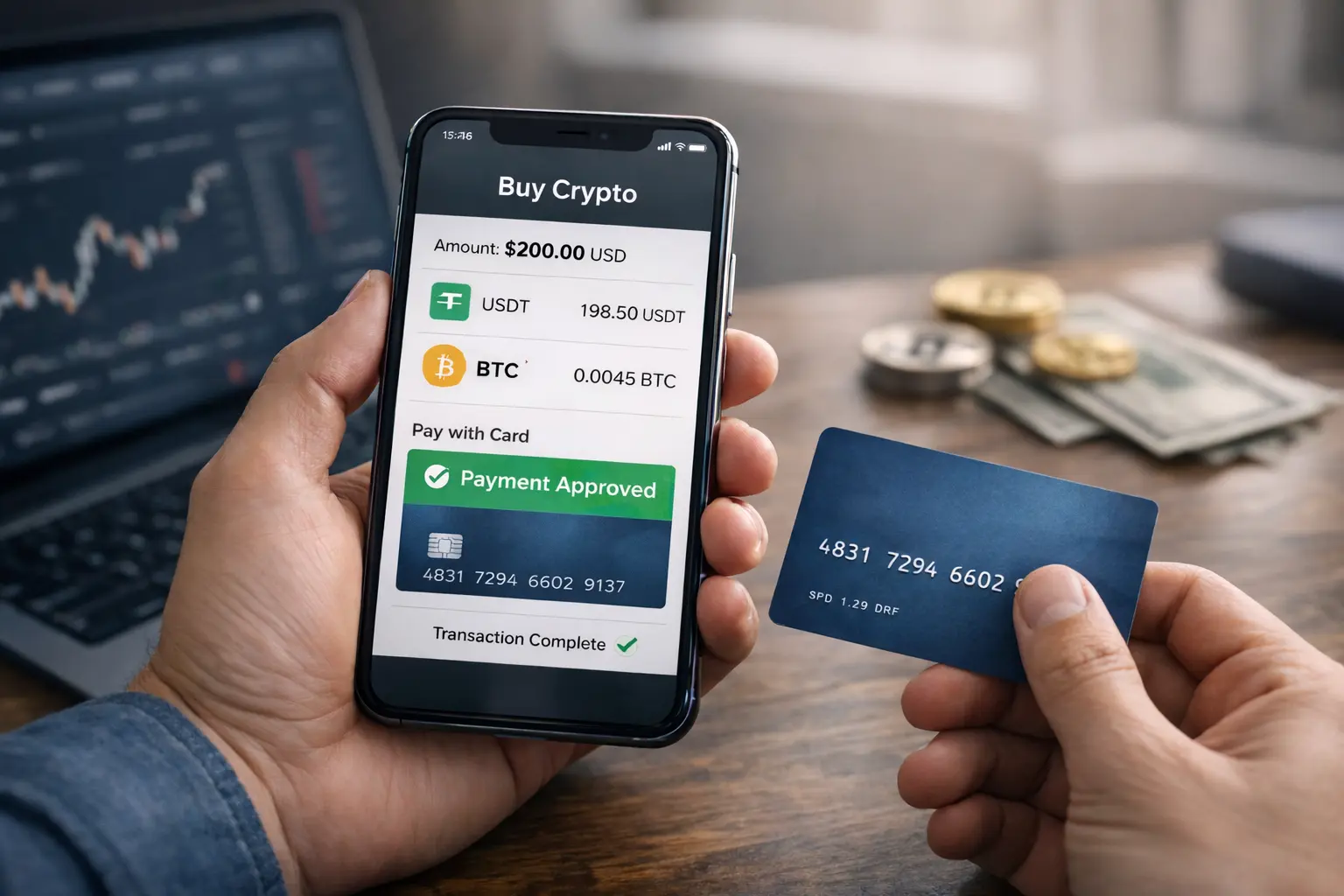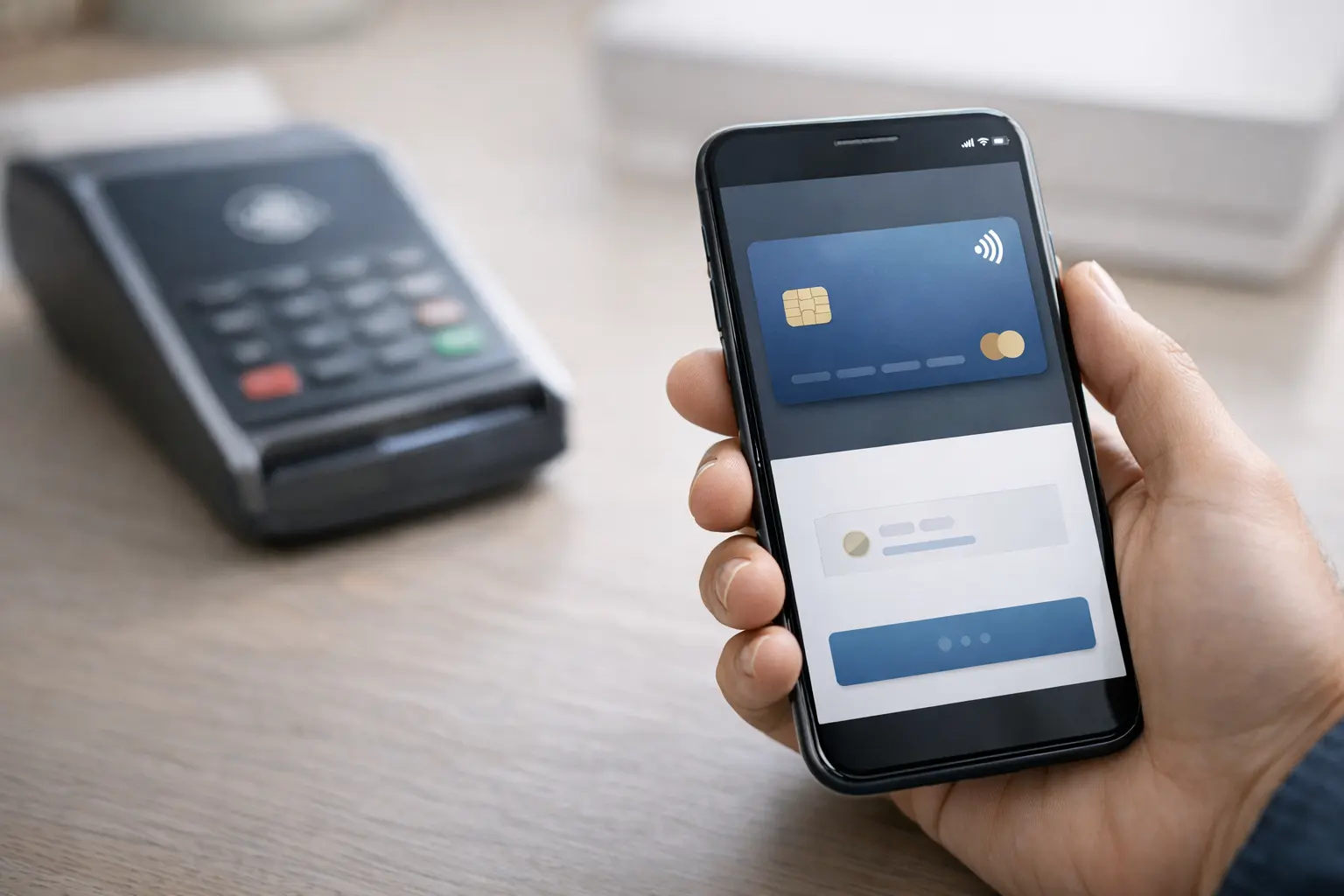
The world of crypto makes sense once you're in it. But at some point, the question arises: can I actually spend this anywhere?
Yes, you can, and there are a couple of ways to do it. However, a crypto debit card is the easiest one. It's a card that pulls from your crypto balance instead of a bank account. This guide explains how they work, what the different card types are, and how to get one even without KYC.
How Do Crypto Debit Cards Work?
With the same 16-digit number, CVV, and tap-to-pay, a crypto debit card is in many ways like any Visa or Mastercard. But where the money comes from is different: it draws on a crypto balance you have loaded onto the card.
Here's how it works behind the scenes:
- The merchant requests payment in fiat (USD, EUR, etc.).
- Your card provider converts the equivalent amount from your crypto balance into fiat.
- The merchant receives the fiat. The crypto leaves your balance.
You're spending crypto without needing to convert it manually or deal with exchanges.
Most crypto cards use stablecoins (USDT, USDC, etc.), but some also let you spend BTC or ETH, though the conversion rate can vary. It's also important to note that the conversion happens when you spend, not when you load the card.
Top Crypto Card Benefits: Why You Need One
People order crypto cards for many reasons: some are chasing privacy, others want to stop manually converting crypto, and a few are hedging against their local currency going sideways. All of these are valid, and a good card serves all three.
1. Opportunity to spend crypto where you want
Most businesses don't accept BTC or USDT directly. A crypto debit card solves this without any effort on the merchant's end. They get paid in fiat, and you spend crypto.
2. A hedge against fiat inflation
If you're holding savings in a currency that's losing purchasing power, you feel it every time prices go up. Crypto can offer a way to hold value outside the traditional banking system while still having a card you can spend from.
3. Privacy
Most financial transactions leave a trail: your bank knows what you bought, when, and where. Some crypto debit cards, particularly prepaid ones that don't require verification, don't link your card activity to your name or identity. The transaction happens, the merchant gets paid, and no personal profile is involved on the card provider's end.
Debit vs. Credit vs. Prepaid Crypto Cards
These three terms are meaningfully different, especially if you're thinking about crypto credit card benefits versus the alternatives.
Crypto credit cards work like any regular credit card: you spend now and pay later. However, you're borrowing money, which means interest rates apply if you carry a balance. Some products also require a significant deposit of crypto as collateral.
Crypto debit cards are linked to a wallet or exchange balance. You spend what's there, and when it's empty, the card stops working. The tradeoff is that you're sometimes at the mercy of that exchange's platform, their fees, their KYC requirements, and their terms of service.
Prepaid crypto cards are the most straightforward option: you load them with cryptocurrency, they hold a balance, and you spend from that balance. They behave like a prepaid gift card, except the funding source is crypto.
PRO TIP: For anyone new to crypto or anyone who values simplicity and control, prepaid beats credit. You can only lose what you loaded. There's no way to accidentally go into debt, and there's no interest clock running in the background.
How to Get a Crypto Debit Card
There are a couple of ways to do it. Here are two easy options:
Option 1: Through a centralized exchange
A few major platforms (for example, Binance, Coinbase, etc.) offer their own debit cards. To get one, you need to:
- Create an account on the selected exchange.
- Complete verification (you are usually asked to provide ID, selfie, and proof of address).
- Wait for verification to be approved (up to a few days).
- Order the card.
- Wait for physical delivery or activate a virtual card.
The exchange cards generally have decent features, rewards programs, and high spending limits. However, such platforms are legally required to verify your identity before issuing a card.
Option 2: Prepaid crypto card
Prepaid crypto cards can have no identity verification. To get one, you usually need to:
- Sign up with an email or Telegram.
- Send crypto to your card balance.
- Receive your virtual card details.
The only downside is that the limits are lower than those of KYC-verified cards. But they are still good for everyday spending.
How to Use a Crypto Card Day to Day
Using the card itself is the easy part. Once it's set up, it works like any other debit card. Here are a few tips that can make your payments smoother:
- For subscriptions, enter the card details once and let the service auto-charge each month. Just make sure your USDT balance stays funded. The card won't overdraft: if the balance is empty, the renewal will fail.
- For in-person spending, add the card to Apple Pay or Google Pay if the provider supports it. It's faster than digging out a physical card.
- For larger purchases, check the conversion spread beforehand. Most crypto cards convert at the live rate plus a small fee, typically 1-2%.
- Save your virtual card details somewhere secure when you first receive them. The 16-digit number, the expiry date, and the CVV. If you need to dispute a charge or re-enter them somewhere, you'll want them on hand.
What is the Best Crypto Debit Card in 2026?
The answer depends on your priorities. If you care more about spending limits and exchange rewards, opt for crypto cards from major exchanges. If you prioritize privacy, the answer is OkiCard.
OkiCard's crypto debit cards are not connected to your identity at any stage of the process. Setup takes less than 60 seconds: you open the OkiCard Telegram bot, deposit USDT, and your virtual card details come back immediately. The card is ready when the crypto lands.
OkiCard works with 40M+ merchants globally and supports Apple Pay and Google Pay for contactless payments. Top-ups are possible with USDT (TRC-20, ERC-20, BEP-20, or SPL) directly from your wallet. The card converts to fiat at the moment of purchase, using the live rate.
If you want to order a crypto card today and use it today, without waiting for a KYC approval window, you already know the answer.